
Back to News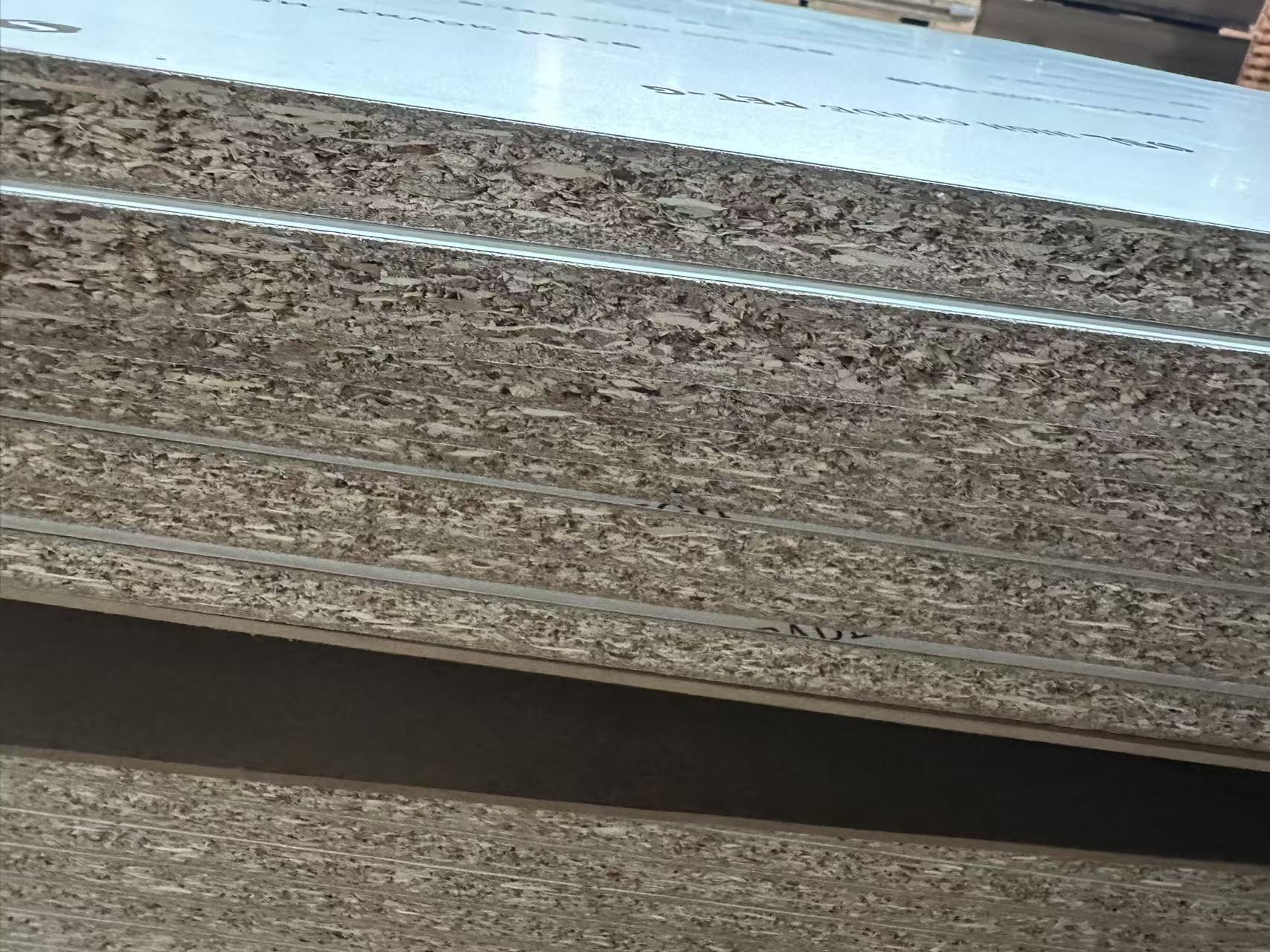
Engineered Wood Panel Supplier Selection: MDF vs Particle Board vs Plywood for Furniture OEMs
A procurement guide for furniture OEMs comparing MDF, particle board, and plywood tradeoffs, supplier evaluation criteria, sample validation, and common sourcing pitfalls.
<h2>Why Panel Choice Drives Supplier Selection</h2>
<p>For furniture OEMs, the engineered wood panel is not a commodity line item. It determines machining behavior, fastener holding, surface quality, weight, and how the finished piece performs in the field. The supplier you choose must match the panel to the application, not the other way around.</p>
<p>This guide focuses on the three panels most furniture OEMs evaluate: MDF (medium-density fiberboard), particle board (PB), and plywood. It covers the tradeoffs that matter at the specification stage, the questions that separate capable suppliers from order-takers, and the procurement pitfalls that surface after the first container ships.</p>
<h2>MDF, Particle Board, and Plywood: Core Tradeoffs</h2>
<p>Each panel type has a distinct internal structure. MDF is made from fine wood fibers bonded under heat and pressure. Particle board is made from wood particles and resin. Plywood is built from layers of veneer with alternating grain direction. Those structures produce different behaviors in the factory and in the finished product.</p>
<h3>Machining and Edge Quality</h3>
<p>MDF machines cleanly and holds detailed profiles, which is why it is common in routed doors, moldings, and painted surfaces. Particle board can chip at cut edges and requires sharper tooling or edge banding to finish cleanly. Plywood's cross-grain construction gives it edge stability, but exposed edges show veneer layers and usually need banding or trim.</p>
<h3>Fastener Holding and Structural Use</h3>
<p>Particle board has lower screw-holding capacity than MDF in most furniture assemblies, so joint design and hardware selection must account for it. MDF holds fasteners better but can split near edges if pilot holes are skipped. Plywood holds fasteners well across its face and edge, and its layered structure resists splitting along the grain.</p>
<h3>Moisture and Dimensional Behavior</h3>
<p>Standard MDF and particle board are sensitive to moisture and swell when exposed. Plywood tolerates occasional moisture better because of its veneer construction, though not all plywood is rated for wet environments. If the furniture will be used in humid or wet conditions, the panel specification must state the exposure condition and the supplier must confirm the panel grade suits it.</p>
<h3>Weight and Handling</h3>
<p>Density varies by panel and supplier, so weight comparisons should be based on the actual specified density, not a general assumption. In practice, MDF and high-density particle board are heavier than typical plywood of the same thickness, which affects shipping cost, assembly ergonomics, and hardware loading.</p>
<table>
<thead>
<tr><th>Decision factor</th><th>MDF</th><th>Particle board</th><th>Plywood</th></tr>
</thead>
<tbody>
<tr><td>Machining and profile detail</td><td>Clean cuts, good for routed profiles</td><td>Can chip at edges; needs sharp tooling</td><td>Stable edges; visible veneer layers</td></tr>
<tr><td>Fastener holding</td><td>Good; edge splitting risk without pilot holes</td><td>Lower; joint design must compensate</td><td>Good; resists splitting along grain</td></tr>
<tr><td>Moisture response</td><td>Swells when exposed</td><td>Swells when exposed</td><td>More tolerant; grade-dependent</td></tr>
<tr><td>Typical furniture role</td><td>Painted and routed components</td><td>Cost-sensitive carcasses and shelving</td><td>Structural and moisture-exposed parts</td></tr>
<tr><td>Surface finishing</td><td>Uniform, paint-friendly</td><td>Requires smooth face or overlay</td><td>Veneer face; finish depends on veneer</td></tr>
</tbody>
</table>
<h2>Match the Panel to the Furniture Program</h2>
<p>Panel selection should start from the product, not the price list. A panel furniture manufacturer building flat-pack wardrobes faces different demands than an upholstered furniture manufacturer building frames and internal supports.</p>
<h3>Panel Furniture Programs</h3>
<p>For cabinets, shelving, and case goods, particle board is often specified for carcasses where cost and flatness matter and the panel is fully edged. MDF is common where doors, drawer fronts, or visible panels need routing or a smooth painted finish. Plywood appears where structural spans, moisture exposure, or lighter weight are priorities.</p>
<h3>Upholstered Furniture Frames and Supports</h3>
<p>Upholstered furniture manufacturers typically need panels for frames, armrests, and internal support structures. Fastener holding and resistance to splitting matter more here than surface finish, because the panel is usually covered. Plywood is often chosen for frame elements that take repeated load or staples; particle board may suit non-structural internal parts where cost is the driver.</p>
<h3>When the Application Is Unclear</h3>
<p>If the end use is not fully defined, do not let the supplier choose the panel by default. Specify the load, the exposure condition, the fastening method, and the finish requirement. A supplier that asks these questions before quoting is showing the right instinct.</p>
<h2>Supplier Evaluation Criteria That Actually Predict Performance</h2>
<p>Panel suppliers can look similar on a quotation. The differences show up in how they handle specification, consistency, and documentation. Use the following criteria to structure your evaluation.</p>
<h3>Specification Discipline</h3>
<p>A capable supplier confirms sheet dimensions, thickness, surface finish, and edge preparation for each order, and for plywood also confirms veneer details and packing method. Ask for a written specification sheet per panel type and check that the quotation references it. Verbal assurances are not a specification.</p>
<h3>Consistency Across Batches</h3>
<p>Furniture OEMs run production lines against tolerances. Ask how the supplier controls thickness variation and surface consistency between batches, and request records from previous orders if available. A supplier that cannot describe its batch control process is a risk to your line, not just your incoming inspection.</p>
<h3>Documentation and Traceability</h3>
<p>Request the panel specification, batch identification method, and packing details. For export programs, confirm that the supplier can provide the documents your destination market requires. Do not assume a certificate exists; ask for the document and verify its scope covers the panel you are buying.</p>
<h3>Sampling Before Volume</h3>
<p>Always validate with a sample run before committing to volume. The sample should use the same panel grade, thickness, and finish as the production order, and should be machined and finished the way your factory will process it. Test cutting, drilling, edge banding, and finishing on the sample, not just visual appearance.</p>
<h2>Questions to Ask Before You Place an Order</h2>
<ul>
<li>Which panel grade and thickness do you recommend for this application, and why?</li>
<li>What are the specified sheet dimensions, and what tolerances apply?</li>
<li>How is surface finish controlled, and what does the face look like under paint or veneer?</li>
<li>For plywood, what veneer details and layer construction are supplied?</li>
<li>How are panels packed for export, and what protection is used at edges and corners?</li>
<li>Can you supply a sample batch that matches the production specification?</li>
<li>What documentation accompanies each shipment?</li>
<li>How do you handle a batch that fails incoming inspection?</li>
</ul>
<p>Record the answers in your supplier file. If a supplier is vague on any of these points, treat it as a signal to verify further before ordering.</p>
<h2>Procurement Pitfalls and Warning Signs</h2>
<p>Most panel sourcing problems are predictable. They come from underspecified orders, unverified samples, and suppliers who treat panel type as interchangeable.</p>
<h3>Quoting a Panel Type Without Confirming the Application</h3>
<p>A supplier that quotes particle board for a moisture-exposed part, or MDF for a structural span, has not engaged with your requirement. The warning sign is a quotation that lists only a price and a panel name.</p>
<h3>Treating Sample and Production as Separate</h3>
<p>A good sample proves nothing if production uses a different grade or finish. Insist that the sample specification is carried into the purchase order and that the supplier acknowledges it in writing.</p>
<h3>Ignoring Edge and Packing Details</h3>
<p>Edge preparation and packing method affect yield and damage rates. Panels that arrive with crushed corners or swollen edges create rework. Confirm edge protection and packing method before shipment, not after.</p>
<h3>Assuming Certifications Without Verification</h3>
<p>Do not accept a certification claim at face value. Ask for the certificate, check the scope, and confirm it applies to the panel and production site you are buying from. If the supplier cannot produce it, plan accordingly.</p>
<h3>Overlooking Moisture Exposure in Transit</h3>
<p>Engineered wood panels can absorb moisture during shipping if packing is inadequate. Specify moisture protection in the packing requirement and inspect on arrival. A supplier that dismisses transit moisture as a minor issue is telling you something about its quality process.</p>
<h2>Decision Path: From Shortlist to Purchase Order</h2>
<p>A practical sequence for furniture OEMs evaluating panel suppliers:</p>
<ol>
<li><strong>Define the application.</strong> State the furniture type, load, exposure, fastening method, and finish requirement.</li>
<li><strong>Shortlist by panel capability.</strong> Confirm the supplier offers the panel type and specification your application needs.</li>
<li><strong>Request written specifications.</strong> Compare sheet dimensions, thickness, finish, and edge preparation across suppliers.</li>
<li><strong>Order samples.</strong> Machine and finish the sample the way your factory will, and record the results.</li>
<li><strong>Verify documentation.</strong> Check that certificates and test records cover the panel and site you are buying from.</li>
<li><strong>Agree on packing and inspection.</strong> Put packing method, edge protection, and incoming inspection criteria in the purchase order.</li>
<li><strong>Run a pilot order.</strong> Evaluate batch consistency before scaling to volume.</li>
</ol>
<p>Each step produces evidence. If a supplier resists any step, the resistance itself is useful information.</p>
<h2>What Good Supplier Communication Looks Like</h2>
<p>The strongest signal in panel sourcing is not a low price or a broad product list. It is a supplier that asks about your application before quoting, confirms specifications in writing, and treats samples as a commitment rather than a formality. Shuyang County Guanxi Wood Products Factory supplies particle board, MDF, and plywood for furniture, cabinetry, and fixture programs, with sheet dimensions, thickness, surface finish, and edge preparation confirmed for each order. Buyers should still verify every specification and document against their own requirements before placing volume orders.</p>